
The Inside of Your Head
5 Signs You Might Have Adult ADHD, And Why You're So Tired Of Living In Your Own Brain
3 min read
From the outside, you probably seem fine. Maybe a little scattered. Maybe a bit much, sometimes. But mostly fine.
From the inside, it's something else entirely.
1. There is no quiet.
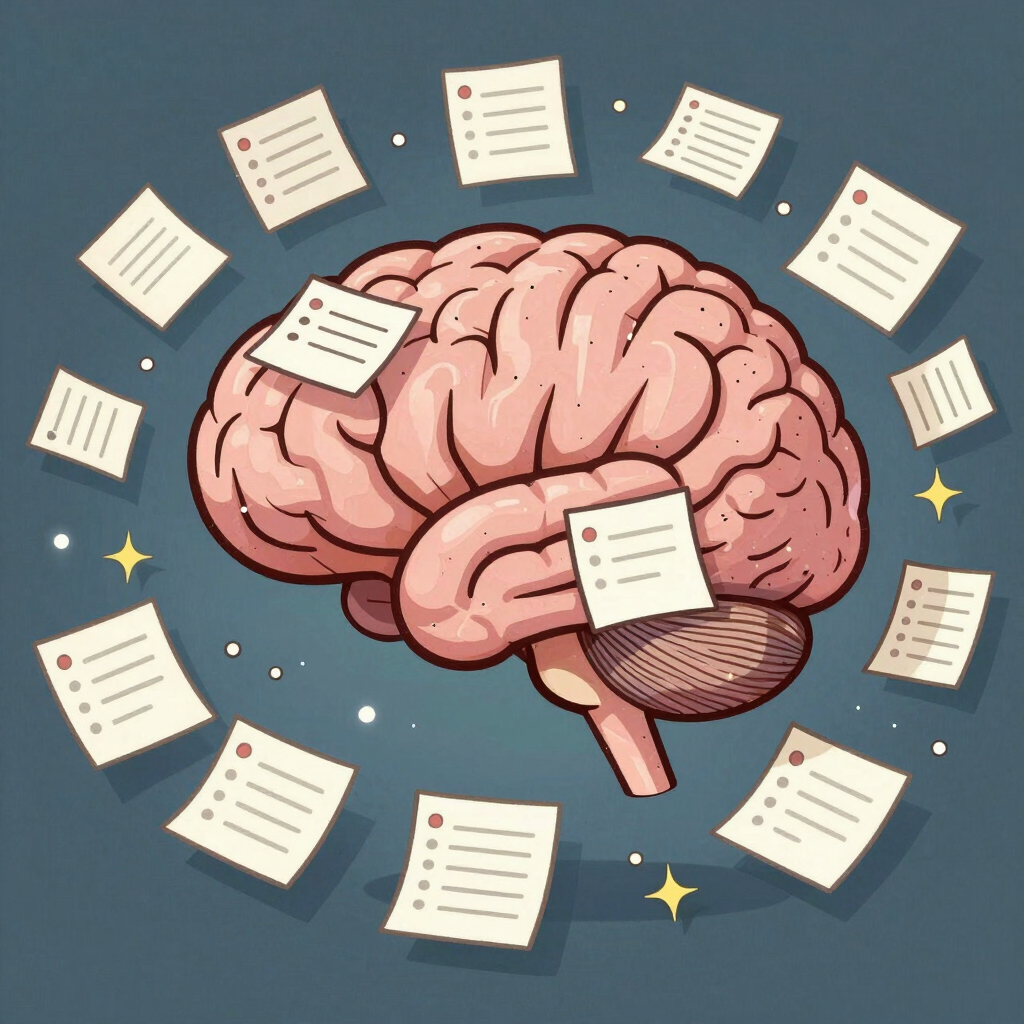
Not when you're trying to fall asleep. Not when someone is trying to have an important conversation with you. Not in a peaceful room, or on a walk, or in the ten minutes you set aside to just breathe. There is always noise: thoughts overlapping thoughts, a background track of everything you forgot and everything you're afraid of and that one song and the thing you should have said in 2014.
People think ADHD means you can't focus on anything. For a lot of adults, it means you can't stop focusing on everything, all at once, with no volume control.
2. You're not bored, you're understimulated. And the difference matters.
Boredom is a mood. Understimulation is a need, a neurological drive for input that, when unmet, makes the ADHD brain seek stimulation in whatever form it can find. Conflict. Crisis. Chaos. Novelty. Anything to get the brain to fire.
A lot of adults with undiagnosed ADHD have spent their lives unconsciously creating drama or urgency because it's the only state in which they feel like themselves. That pattern tends to devastate the things around it.
3. Every system you've ever built has collapsed, and you've stopped trusting yourself to build them.
You have tried everything. The planners. The apps. The color-coded everything. The alarms, the sticky notes, the accountability partners. And every system has eventually died the same death, because maintaining a system is its own executive function task, and that's exactly the thing that's impaired.
It's not that the systems were bad. It's that you were trying to use a workaround for something that was never diagnosed and never properly addressed.
4. You can see exactly what you need to do. You still can't make yourself do it.
This is the one that is hardest to explain to people who don't experience it. It's not laziness. It's not avoidance in the way most people mean it. It is a specific, horrible paralysis between knowing and doing, where the task is visible, the steps are clear, the stakes are understood, and your brain simply will not initiate.
That gap has cost you time, money, relationships, and a significant portion of your self-worth. And you've been blaming yourself for it your entire life, because no one told you it had a name.
5. You've been Googling "why can't I just do things" at 2am for years.
And something brought you here. Something that felt like recognition, finally seeing the shape of the thing that's been living in you without a name.
ADHD in adults doesn't always look like a hyperactive kid who can't sit still. It looks like a tired, high-functioning person who has spent decades compensating, masking, and holding it together with both hands while quietly wondering why everything that comes easily to other people feels like swimming upstream.
You're not lazy. You're not broken. You're not too much or too little or fundamentally flawed.
You might just be someone whose brain works differently, and who deserves actual support for that, probably for the first time in your life.
If this feels like recognition more than information, that matters.
Because most people don’t end up here by accident. They end up here after years of trying to explain something that never quite made sense out loud. After exhausting every system, every workaround, every version of “try harder” that was supposed to fix it and didn’t.
At some point, you start to wonder if this is just how life is going to feel: loud, heavy, harder than it seems like it should be.
But it doesn’t have to stay that way.
Not because you need more discipline. Not because you need to become a different person. But because understanding what’s actually happening in your brain changes what you reach for next, and what actually has a chance of working.
Wait, Is This ADHD? was created for this exact moment, the point where things are starting to click, but you don’t yet have the language or tools to move differently. It breaks down these patterns in a way that feels real, not clinical, and gives you practical ways to work with your brain instead of constantly pushing against it.
If this post felt like it was describing something you’ve never been able to explain, it might be worth following that thread a little further.
If any of these resonated, talking to a professional who specializes in adult ADHD is a worthwhile next step. A formal evaluation can change the entire story you've been telling about yourself.
Join the Un-Perfectionists!
Subscribe to our newsletter and be the first to know about our new tools and get discounts on our launches! These benefits are exclusive to our subscribers.
© 2024. All rights reserved.